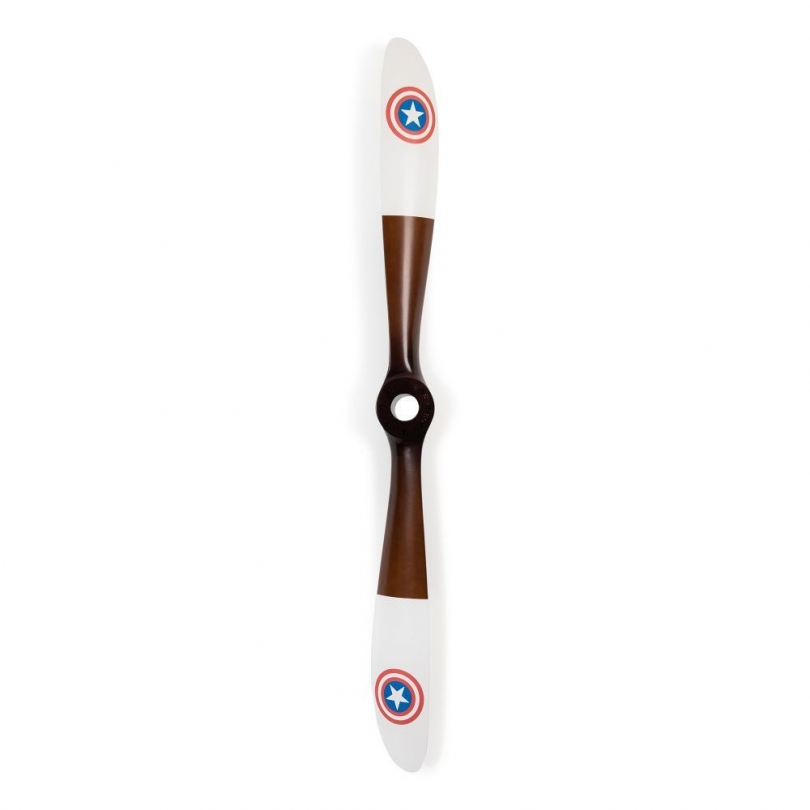
Sopwith Star
Propeller About Propellers.
The early days of aviation drew heavily on nautical knowledge. The assumption that a modified ship’s propeller could work in the air proved to be correct. Large aircraft, and airships in particular, were steered from a proper bridge, complete with a steering wheel and a deck telegraph. Pilots used nautical sextants to determine their position. Many different propeller designs were trialled before they evolved into the ones we see today. As for the colours… Squadron commanders during the First World War painted their aeroplanes in their own colours… a tradition dating back to the Middle Ages and its jousting tournaments. The early days of aviation were regarded as a gentleman’s pastime, and propellers were passionately collected, often the only part of the aeroplane deemed worthy of preservation.
Origin: Asian
Period: New
Materials: Painted wood
Dimensions: H 186 x 15 x 9 cm